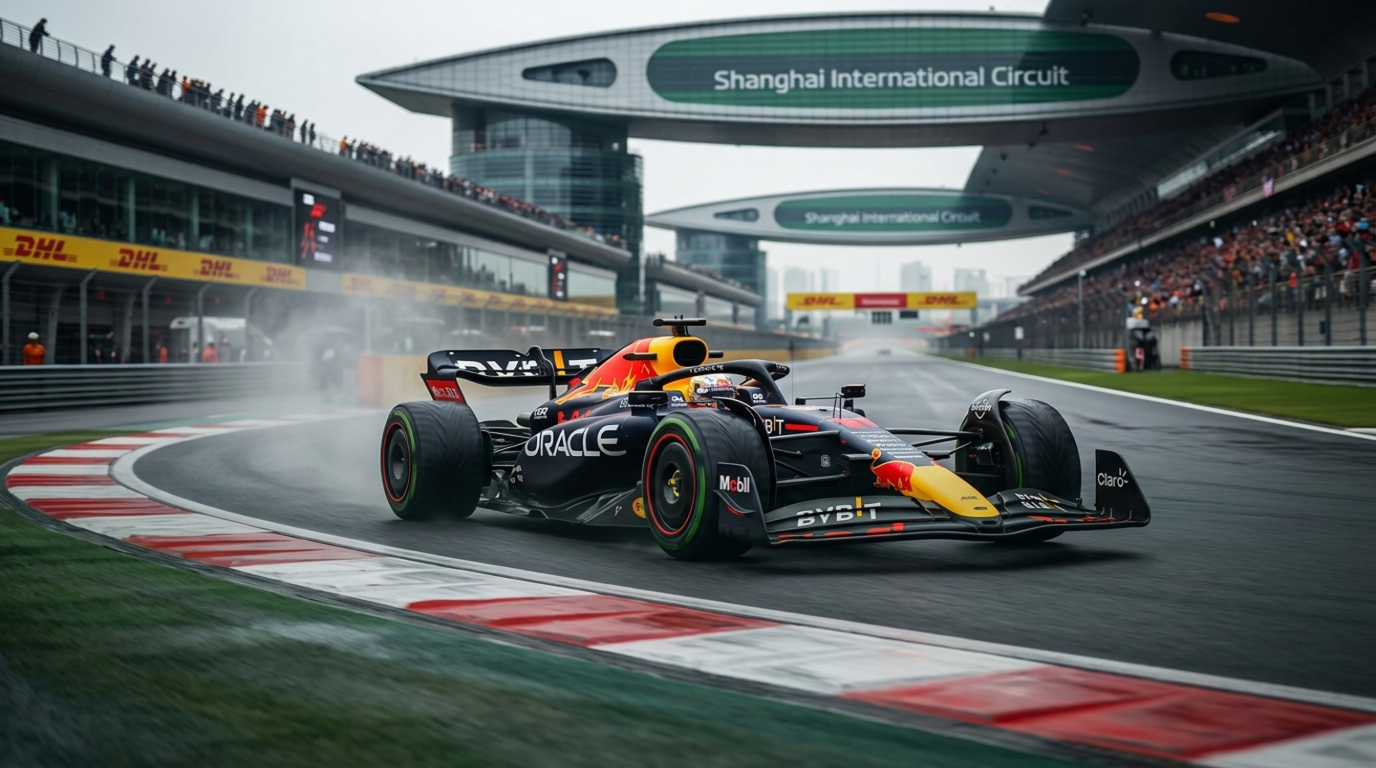
Shanghai International Circuit | March 15, 2026 | Round 2 of the 2026 FIA Formula One World Championship
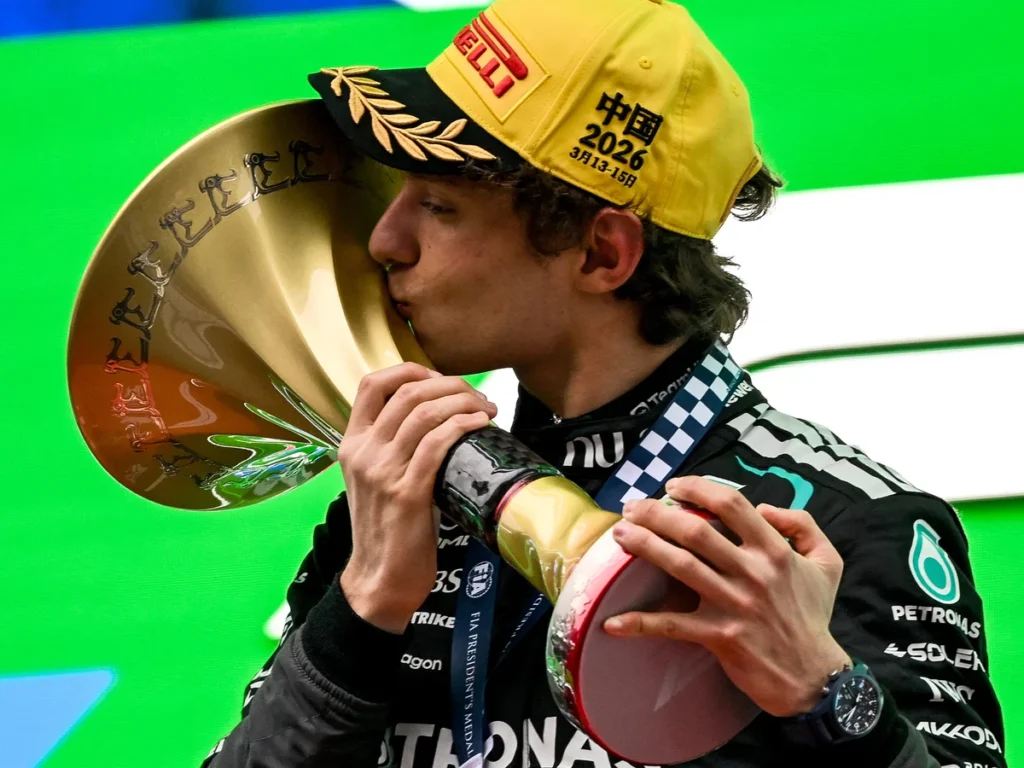
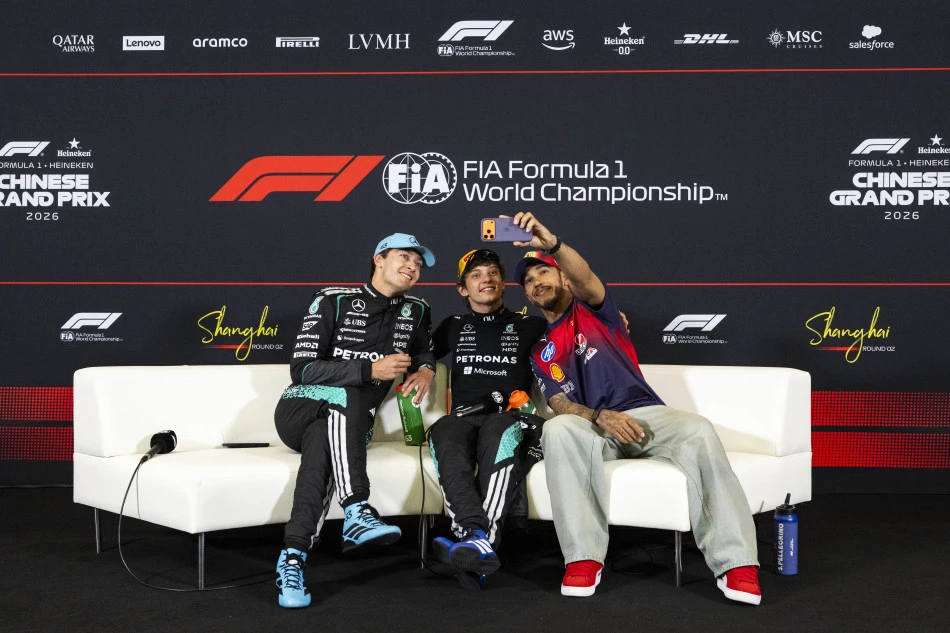
There are moments in Formula 1 that define careers before they have truly begun — moments where a driver steps from the shadow of expectation into the blinding spotlight of history. Sunday, March 15, 2026, at the Shanghai International Circuit was one of those moments. Top plays of the night → Kimi Antonelli claimed his maiden Formula 1 victory in the Chinese Grand Prix, beating Mercedes team mate George Russell as Ferrari’s Lewis Hamilton claimed his first Grand Prix podium for the Scuderia after a thrilling intra-team battle.
For Antonelli — just 19 years old, Italian, brilliant, and carrying the weight of a nation’s motorsport legacy on his young shoulders — the victory was more than a race win. He became the second-youngest Grand Prix winner after Max Verstappen at the 2016 Spanish Grand Prix, and the first Italian to win a Grand Prix since Giancarlo Fisichella at the 2006 Malaysian Grand Prix. F1 2026 changes → By setting the fastest lap, he also became the youngest driver ever to achieve a hat-trick.
The emotion was raw and unfiltered. “I’m speechless. I’m about to cry, to be honest. Thank you so much to my team, because they helped me to achieve this dream,” Antonelli said, his voice cracking with feeling as the Shanghai crowd roared its approval. “I’m super happy. I said yesterday I really wanted to bring Italy back on top and we did today, even though I gave myself a little bit of a heart attack towards the end with the flat-spot. Champions League last 8 teams → It was a good race.”
The 2026 Formula 1 season, operating under a sweeping new technical regulation framework, is already delivering drama of the highest order. Round 2 at Shanghai did not disappoint.
Before the Race: Chaos, Records, and Empty Grid Slots
The story of the 2026 Chinese Grand Prix did not begin at lights out. It began long before, in qualifying on Saturday, where Antonelli rewrote the history books. Cornell basketball 2026 → The Mercedes driver made headlines in Qualifying by becoming the youngest pole sitter in Formula 1 history, securing top spot by two tenths of a second. His qualifying lap — a stunning 1:32.064 on the C4 Soft tyre — beat Sebastian Vettel’s long-standing record as the youngest-ever Formula One polesitter.
Russell lined up second at 1:32.286 despite session-long mechanical difficulties. Hamilton qualified third at 1:32.415 and Leclerc fourth at 1:32.428. The two Ferraris were close — dangerously, intriguingly close to the Silver Arrows. Piastri qualified fifth at 1:32.550 and Norris sixth at 1:32.608, with Gasly seventh at 1:32.873 and Verstappen eighth at 1:33.002.
But Sunday’s drama began before a single wheel turned in anger. The grid told the story before anything moved. Piastri’s McLaren was being wheeled away with six minutes to the formation lap. Norris remained stationary in the pit lane. Neither would start. MLB opening day schedule → McLaren confirmed the faults were separate but both linked to the Mercedes power unit: two different electrical failures on the same power unit family on the same afternoon.
The scale of McLaren’s misfortune was staggering. This was the first time both McLarens did not start the race since the 2005 United States Grand Prix, where 14 cars on Michelin tyres withdrew due to tyre safety concerns. For Piastri, it was a continuation of a nightmare start to 2026 — the Australian had crashed on his reconnaissance lap in Melbourne before the Australian Grand Prix, and now failed to start in China, completing zero racing laps across the first two rounds of the season.
McLaren were not alone in their misery. Bortoleto did not leave the Audi garage. Albon did not take his Williams to the grid. Four empty slots as eighteen cars lined up for the start of Round 2. It was a sobering start to a weekend that had promised so much.
Lap 1: Hamilton’s Lightning Strike
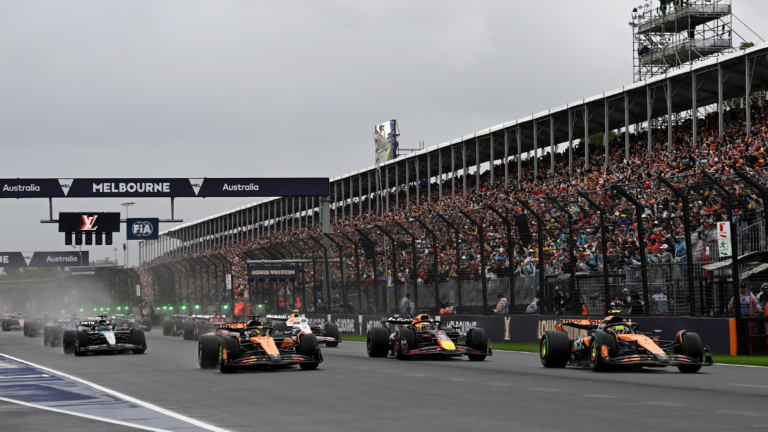
When the lights went out over Shanghai, what unfolded in those first few seconds was a masterclass in Ferrari’s standing start capability under the new 2026 regulations — the same explosive off-the-line pace that had already marked the Scuderia’s season opener in Australia.
Polesitter Antonelli immediately moved across on Russell to open up space on the younger Mercedes driver’s left that allowed Hamilton to surge into the lead from P3 on the grid on the outside. Leclerc moved ahead of Russell and tried to go around the outside of Antonelli as well, but the Ferrari driver found himself pinched on the kerb at the Turn 3 left-hander and fell back into third.
Shanghai’s long, sweeping layout had given Hamilton the runway he needed. For a brief, electric moment, the seven-time World Champion led the 2026 Chinese Grand Prix in scarlet. Behind the top four, chaos rippled through the midfield. Hadjar found himself spinning at Turn 13 heading onto the back straight, forcing Bearman into avoiding action, while the second Red Bull of Verstappen on the soft tyre had slipped back from his grid position immediately.
The opening lap set the narrative for the entire afternoon: Ferrari pace off the line, Mercedes control over the distance, and midfield carnage at every corner.
Laps 1–10: The Early Fight and Antonelli Reasserts Authority
Hamilton’s lead lasted barely a lap. On Lap 2, Antonelli reclaimed the position down the long Shanghai back straight and began controlling the race from there. The Italian’s aggression was measured and precise — he did not panic in the face of Hamilton’s early challenge; he simply waited for the right moment, took it, and never looked back.
Russell was also on the move, demoting Leclerc for P3 at the start of Lap 3 and repeating the move on Hamilton two laps later. Formula 1 The order had reshuffled into its natural hierarchy: Antonelli, Russell, Hamilton, Leclerc. Mercedes were running one-two, but Ferrari’s two drivers were close — very close — on the road and on pace.
Antonelli left the chasing Ferraris behind quickly at this stage. He had almost six seconds in hand by lap nine, when the Safety Car came out. RaceFans The Italian was pulling away effortlessly, his Mercedes seemingly better suited to the Shanghai asphalt than any other machine on the grid.
Further back, the strategy game was already beginning. Lawson, Verstappen and Sainz became the first runners to pit at the end of Lap 10, rejoining just as Stroll brought his Aston Martin to a stop at Turn 1 that necessitated a Safety Car.
Lap 10: The Safety Car That Changed Everything
Lance Stroll’s stricken Aston Martin grinding to a halt at Turn 1 was the moment that crystallised the race’s defining strategic sequence. A Safety Car on lap 10 for Stroll’s Aston Martin arrived one lap after Verstappen had already committed to a full pit stop, handing the free pit window to everyone still running.
The timing was perfect for Antonelli and the front-runners. The leading runners all pitted to swap their medium Pirelli tyres for fresh hard rubber, Antonelli rejoining in the lead but now heading Colapinto and Ocon, both having started on the hard tyre and deciding not to pit, as Russell, Hamilton, Lindblad, Leclerc, Hulkenberg, Gasly and Bearman completed the top 10 for the restart.
But the Safety Car created a complicated problem for Russell. Russell was a little over a second behind at the time, and looked to be eyeing a chance to over-cut his team mate. However, the Safety Car meant Mercedes would try to service both cars at once. Not only did that deny Russell his best chance to get ahead, it also put an obstacle in his way. Colapinto and Ocon, who had decided not to pit, split the Mercedes as they rejoined the track.
The restart of the race would not be kind to the championship leader. As racing resumed, Russell struggled to generate heat in his tyres and suffered from a lack of grip, running slightly wide at Turn 6 and allowing Hamilton in front. Suddenly, the order had transformed: Antonelli was clear, but now Hamilton and the two Ferraris were ahead of a struggling Russell. The British driver had work to do.
Laps 14–28: Ferrari vs Mercedes, Hamilton vs Leclerc
What unfolded in the middle portion of the 2026 Chinese Grand Prix was a microcosm of the entire season’s promise under the new regulations. Ferrari ran their two drivers wheel to wheel from lap 25 with no team orders called, Hamilton and Leclerc trading positions across multiple corners for several consecutive laps.
By lap 20, the order had clarified into: Antonelli, Hamilton, Leclerc, Russell. The race’s defining sequence began on lap 25. Leclerc closed on Hamilton, the pair going side by side through corners, swapping positions, fighting across multiple laps without team orders and without quarter. Hamilton took the place back. Leclerc retook it. Hamilton again. Three cars in a train: two Ferraris and a Silver Arrow close enough to use Overtake Mode, lap after lap, through corners, using every tool available. That is what the 2026 regulations were designed to produce.
Leclerc’s own radio was pure theatre. “This is actually quite a fun battle,” the Monegasque said, even as the pair pushed each other to the absolute limit. Hamilton, meanwhile, was fighting on multiple fronts — managing his energy deployment against an increasingly aggressive Leclerc while keeping Russell behind. Hamilton called on Ferrari to “give me something,” as he complained about a lack of battery power.
Russell, meanwhile, had been using the Ferrari battle as cover. By the time Russell regained second place on lap 29, Antonelli was seven-and-a-half seconds ahead. The gap between Antonelli and the rest had grown decisively — the price paid by everyone who had fought anyone.
Verstappen’s Race Unravels
For the reigning four-time World Champion, Shanghai was a continuation of the misery that had begun in Australia. Max Verstappen left Shanghai a frustrated man, as Red Bull were struggling for pace compared to the leading teams. Verstappen and team mate Isack Hadjar could only start the Sprint and Grand Prix from P8 and P10 respectively, but bad starts each time put Verstappen to the very back of the field on the opening lap.
Despite the poor start, Verstappen had managed to claw his way back to a points-scoring position by the mid-race. He was running P6 in the Grand Prix until an ERS (Energy Recovery System) cooling issue forced him to retire with 10 laps remaining. Alonso and Stroll also failed to see the chequered flag for Aston Martin, leaving the team with nothing to show for a painful weekend.
With only 12 points from 2026’s opening two race weekends, Red Bull are now aiming to improve from Suzuka onwards after a challenging start to the new campaign with their RB21 car. The dominance that defined Red Bull’s recent history seems, at least for now, a distant memory.
Laps 35–56: Antonelli Holds Firm, Hamilton Seals the Podium
As the race entered its final third, the podium battle reached its crescendo. Leclerc moved back ahead of Hamilton at Turn 14 on Lap 39, but Hamilton fought back at Turn 1 in a decisive move for the final podium position, the two drivers now 20 seconds behind Antonelli as Russell reduced the margin to his team mate to under seven seconds.
Up front, Antonelli was not yet done providing the crowd with drama. He slipped up at Turn 53 — squandering two seconds by locking up and running wide. For a brief, terrifying moment, the question hung in the air: had Antonelli handed Russell a lifeline? The answer was emphatically no. Despite a nervous moment after running deep at the Turn 14 hairpin with four laps remaining, Antonelli finished 5.5 seconds clear of Russell to become the second youngest winner of a Grand Prix.
It was Hamilton who would have the last laugh in the Ferrari battle as he kept third to claim his first podium finish since the Las Vegas Grand Prix. ESPN For the seven-time champion, now racing in red for the first time in his extraordinary career, it was a deeply symbolic moment — claiming his first Ferrari podium at the very circuit where, just twelve months earlier, he had claimed what would prove to be his final race victory for Mercedes in the 2025 Chinese Sprint.
The Midfield: Bearman Shines, Ocon Penalised
Away from the headline battles at the front, the midfield served up its own compelling subplot. Ollie Bearman delivered arguably the drive of his young career for Haas, having to take avoiding action on the opening lap as Isack Hadjar spun through the long right-hander of Turn 13. From a compromised position deep in the pack, Bearman worked his way methodically through the field, taking his chance with a stop under the safety car before showing maturity in picking through some tight battles to fifth.
Pierre Gasly continued his solid early-season form for Alpine, claiming sixth place, while Liam Lawson scored seventh for the Racing Bulls ahead of Red Bull’s Isack Hadjar in eighth. Carlos Sainz scored Williams’ first points of the season in P9 , while Franco Colapinto completed the top 10 for Alpine — despite being involved in an incident earlier in the race when Esteban Ocon, who was slapped with a 10-second penalty for colliding with Colapinto at Turn 2, having rejoined from his pit stop just in front of the Haas driver who was up to speed having stopped earlier.
Full Race Classification
| Pos | Driver | Team | Gap |
|---|---|---|---|
| 1 | Kimi Antonelli | Mercedes | Winner |
| 2 | George Russell | Mercedes | +5.515s |
| 3 | Lewis Hamilton | Ferrari | +25.267s |
| 4 | Charles Leclerc | Ferrari | +28.894s |
| 5 | Oliver Bearman | Haas | +57.268s |
| 6 | Pierre Gasly | Alpine | +59.647s |
| 7 | Liam Lawson | RB | +1m20.588s |
| 8 | Isack Hadjar | Red Bull | +1m27.247s |
| 9 | Carlos Sainz | Williams | +1 lap |
| 10 | Franco Colapinto | Alpine | +1 lap |
| 11 | Nico Hulkenberg | Audi | +1 lap |
| 12 | Arvid Lindblad | RB | +1 lap |
| 13 | Valtteri Bottas | Cadillac | +1 lap |
| 14 | Esteban Ocon | Haas | +1 lap |
| 15 | Sergio Perez | Cadillac | +1 lap |
| DNF | Max Verstappen | Red Bull | — |
| DNF | Fernando Alonso | Aston Martin | — |
| DNF | Lance Stroll | Aston Martin | — |
| DNS | Lando Norris | McLaren | — |
| DNS | Gabriel Bortoleto | Audi | — |
| DNS | Alexander Albon | Williams | — |
| DNS | Oscar Piastri | McLaren | — |
Records Shattered, History Made
The significance of Antonelli’s performance across the full Shanghai weekend cannot be overstated. He arrived as an intriguing talent, and left as a record-holder across multiple categories:
Antonelli achieved his maiden career pole position, beating Sebastian Vettel’s record as the youngest-ever Formula One polesitter. He converted it to his maiden win, setting multiple milestones — becoming the second-youngest Grand Prix winner after Max Verstappen at the 2016 Spanish Grand Prix, and the first Italian to win a Grand Prix since Giancarlo Fisichella at the 2006 Malaysian Grand Prix. By setting the fastest lap, he also became the youngest driver ever to achieve a hat-trick.
Antonelli, at 19 years and 202 days, delivered a composed drive from pole position at the Shanghai International Circuit to dislodge Sebastian Vettel on the all-time list and enter the record books behind only Max Verstappen.
For Mercedes, the result was a statement of intent. Only the second teenager to have ever won an F1 race, Antonelli’s result — and performance all weekend — is full vindication for Mercedes’ bold decision to promote him into Hamilton’s hallowed seat. The Silver Arrows have found their new standard-bearer, and he is extraordinary.
Championship Implications
The standings after two rounds paint a fascinating picture. George Russell, despite finishing second in China, retains the championship lead after his victory in Australia. His consistency across two weekends — a race win and a sprint win — has established him as the early standard-bearer for the drivers’ title.
But Antonelli has now announced himself as a genuine contender. When asked about the emerging intra-team rivalry with Russell, the young Italian was measured but competitive: “We are just at the beginning, we will keep pushing. George is an incredible driver, very strong on all aspects, so it will be tough to beat him.”
For Ferrari, Hamilton’s podium and Leclerc’s fourth place underline the Scuderia’s race day potential. Their off-the-line pace is exceptional under the 2026 rules, and their straight-line speed is formidable. The team’s refusal to issue team orders during the Hamilton-Leclerc battle — Ferrari team principal Fred Vasseur hailing the close-quarters battling as “good for F1” — signals an internal philosophy that prizes entertainment alongside results. Whether that pays dividends over a 24-race season remains to be seen.
For Red Bull and McLaren, there is urgent work to be done. The former faces significant shortcomings with the RB21, Verstappen increasingly vocal in his criticism of the new regulations. The latter must solve a power unit reliability crisis before the season truly escapes their grasp — Piastri having not completed a single racing lap in 2026 represents an almost incomprehensible championship deficit at this early stage.
What Comes Next
F1 will take a short break before returning for the Japanese Grand Prix from March 27–29. Suzuka — one of the calendar’s most celebrated circuits — awaits, and for Antonelli, it will be his first race as a Grand Prix winner. The pressure, the expectation, and the history will follow him down every straight and through every corner.
But in Shanghai on a cool March Sunday, none of that mattered. A 19-year-old Italian boy stood on the top step of the podium, tears in his eyes, the weight of two decades of Italian motorsport drought lifted from his shoulders, and the entire future of Formula 1 seemingly resting comfortably in his hands.